Event: Trendspotting in Hong Kong

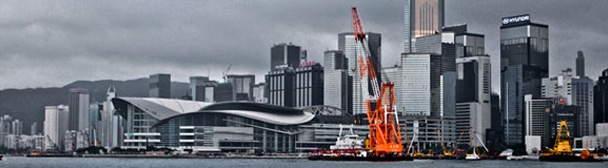
The other day, I participated in a very interesting conference at Radisson BLU, Copenhagen arranged by Hong Kong Trade Development Council. It was a really nice way to get up to speed with current developments in Hong Kong and China. Here are some of the most interesting points.

The reason for the conference is the creation of a new commercial district in nearby Zhuhai on Mainland China (that will be connected to Hong Kong and Macau with a bridge in a couple of years) and that HKTDC is fishing for foreign investments and representation.

Hong Kong as Asian trendsetter:

Hong Kong is the regional design capital where rich Chinese go to shop. Several design and fashion weeks during the year. 44% of luxury products are Western brands. Free-trade agreement with China applies if a sufficiently large part of the product is created in Hong Kong.

IP protection (by Adrian Toutoungi, Partner, Eversheds LLP):

Hong Kong should be considered the gateway to China for a range of reasons:

  • The legislative system is much more stable and familiar (tradition and language), because it’s based on British Common Law, but applies in Mainland China. In comparison, the Chinese system is very complicated and is regionally divided, which means that you may have to fight the same legal battles across different regions and levels with different results.
  • The current five-year plan aims at establishing China as an innovation- and patent-based economy.
  • The Chinese government has stepped up legislative efforts to protect IP property rights, but is still behind with enforcement.
  • However, if you register your trademark (remember transliterations) with the customs authorities, they will actually take active steps to seize counterfeit products. Depending on your business strategy (brand-based, patent-based, short life cycles, etc.), it might be a good idea to register your trademark as soon as possible even though you are not actually planning on entering the Chinese market. The Danish fashion brand Hummel didn’t and ended up having their legitimate products seized as counterfeit once they started exporting to China, because a Chinese company had registrered their trademark!
  • Pitfalls in the legislative process: If you hire a Chinese or Hong Kong firm to file for patents, they actually owns these unless specified in the contract. Improvements to original designs by local partners are owned by them. Be very aware where your IPs and trademarks are actually valid, for instance it turned out that Apple only had the rights to the name “iPad” in Taiwan not in Mainland China.

Opportunities for Danish design firms (Speaker: Nille Juhl-Sørensen CEO DDC):

  • Hong Kong designers are just as good as Danish designers, but much faster (prototype development in weeks rather than months).
  • We shouldn’t try to sell “Danish” design, but collaborative design, that suits their needs: Small living places calls for minimalism and multi-functionality, and considering a traditional Asian marketplace, the design should probably be loud and visible rather than quiet and discrete to fit the need to show off. Bonus opportunities are to sell the same products to India and other countries with similar luxury consumption patterns.
  • Danish designers should focus on “social design”: Healthcare, social problems, basic needs in rural settings, cleantech. For instance: Why not increase the office temperature in air-conditioned buildings by a couple degrees to reduce cold-shock and energy consumption?
  • Danish designers need to develop an “Asian mindset” but also act as outsiders being able to think out of the box.

A lot of other interesting remarks were made by other speakers from Hong Kong, Kontrapunkt and Danish Chamber of Commerce in South China. At the networking lunch afterwards I had a very nice long chat with Gitte Just CEO of Danish Design Association about Toronto and how to create much more media hype promoting Danish desingers and strengthen public awareness in both domestic and overseas markets.
Research: Personal branding on designer webpages

Establishing and retaining your status as a designer requires solid personal branding. You would expect that most design companies would have a very well designed webpage. Surprisingly often, this is not the case, probably due to a combination of designer culture and lack of communication expertise.

I followed a course in Visual Identity in the autumn of 2011. In my exam project, I moved beyond merely evaluating the visual elements of a selected company’s visual identity, and made a comparative analysis of 39 companies tagged with industrial design in the Danish Design Centre’s database.

First impressions matter:

User experience tests consistently show that web users on average spend 27 seconds on the main page of a website, and that they will simply move on to another website, unless the page achieve four important goals: Tell people what site they have arrived on, what the company can do for them, something about the company, and how to easily move on to the most relevant sections.

Messages have to be ultra lean, only ten to twenty words, because the visitors are spending most of the time figuring out where to go next, rather than reading word for word. Most people won’t scroll (77%) and if they ever come back, they will spend even less time reading your main page.

Pictures: what are they showing?

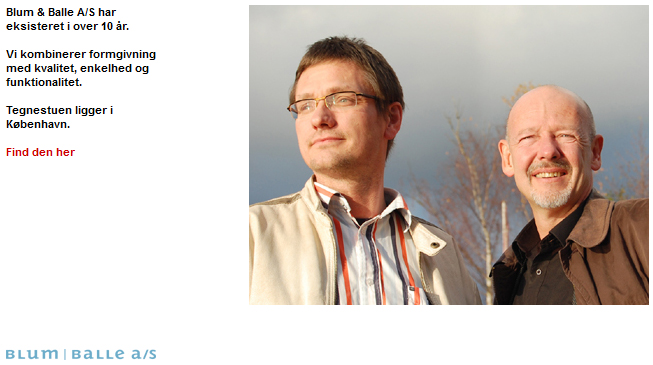
Trustworthy partners at blum-balle.dk

The webpages are very varied, but most of them have a logo, navigation menu, and pictures of designs. Very few had pictures of the designers themselves, which is a bit surprising since the product on offer for an interested production company is actually the designer herself, and her ability to participate in future development projects.

Choosing pictures for the main page is obviously tricky: Design pictures were usually either displayed as minimalistic (one or few pictures), complex (many pictures), hybrid (slideshow), or neutral (no pictures). Each of these options comes with certain risks: selecting one wrong picture, showing too many and too small pictures, a slideshow that changes too fast or too slow, and a page that is just end up boring.

Text: who are they talking to?

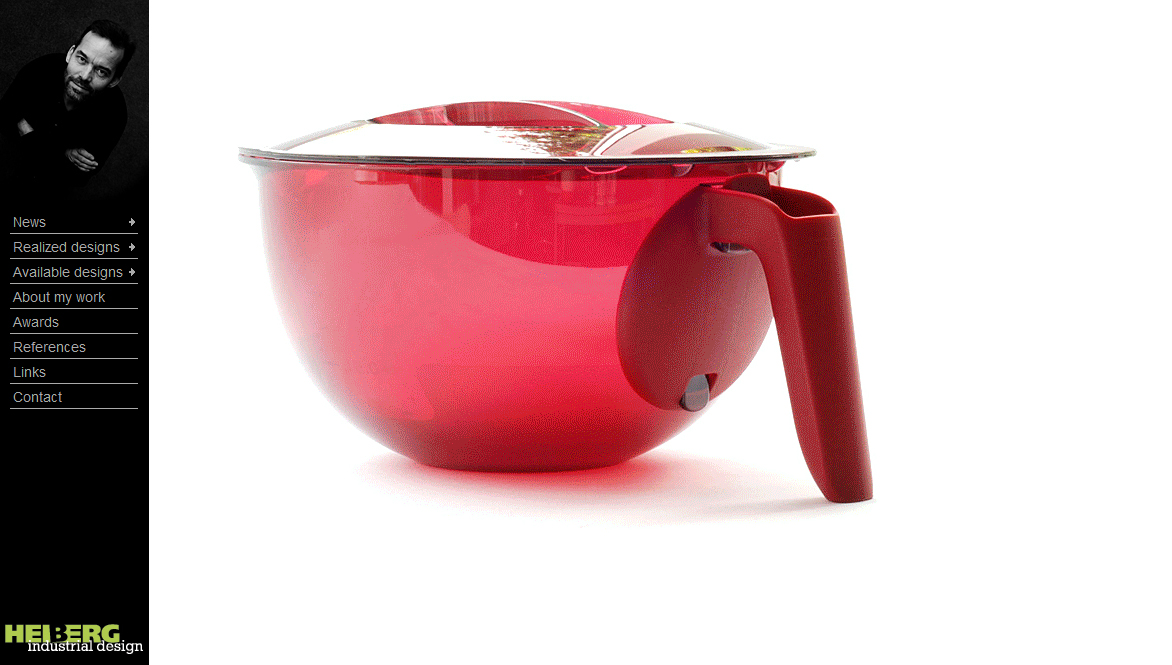
Striking, artsy, and beautiful… but how many has actually been sold? heiberg-id.com

According to Guy Julier, most designers have a secret desire to create “art” and achieve recognition from their peers , by having their design selected for exhibitions, winning design awards, and ultimately having somebody else praise the aesthetic value in books about the history of design. And a fear of being accused of “selling out” by their colleagues if they’re too good at fulfilling their customers need for utility, added value and commercial potential.**

If IKEA is a customer, these designers can sell! halskovdalsgaard.dk

Only a third of the pages had text describing their unique selling proposition: company profile, design philosophy, design examples, or case descriptions. The choice obviously depends on whether they wish to differentiate themselves from competitors based on working method or earlier successes (often backed up with design awards).

However, almost none described why the consumers would benefit from increasing the design content of the products or the commercial performance of earlier designs, which is of obvious importance to interested production companies.

Refreshingly rational arguments from onoe-design.dk

How do you make a good design portfolio webpage?

Designers have different profiles in terms of specialization, experience, level of success, etc. but a few general recommendations can be made:

  • Promote yourself as a designer and attractive partner in development projects.
  • Show the performance of earlier designs in terms of economic and communicative performance of products (e.g. number of products sold, how much free media attention has the design attracted, etc.).
  • Remember that you are not writing to impress your colleague designers. You are writing to businessmen that consider your design as a potential investment of money and your most important priority is to convince them that this investment will pay off.
  • If in doubt, hire a graphics designer and/or communication expert rather than make a webpage that looks unprofessional

Great examples:

* Nielsen, J & Loranger, H  2006: Prioritizing  web usability, chapter 2
** Julier, G. 2000: The culture of design

Research: Is the Danish media even interested in design?

Media attention is crucial for attracting the necessary talent, establishing new designers, and creating a strong home-market that can be used as spring-board for international expansion. Back in May, I made a little investigation of how much and where ‘design’ was mentioned in Danish media. This gave some really interesting insights into design journalism.

Coming from an education in communication, marketing and branding, with special focus on design and fashion, I was obviously interested in knowing where the challenges are for the Danish design field, and where I can help make a difference. Here are some of the most interesting results:

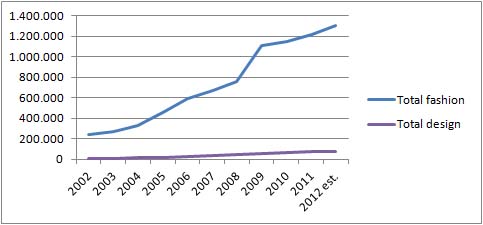
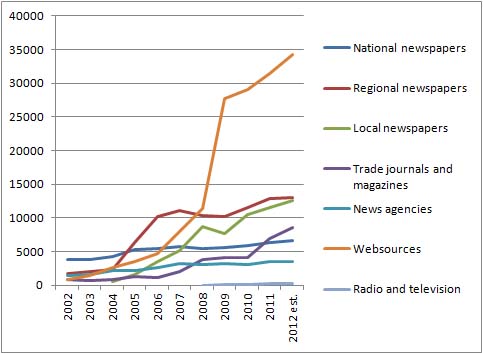
The good news is that there seem to be a dramatic increase in the use of the word ‘design’ from roughly 8500 to 72000 articles over the past ten years. Unfortunately these figures are heavily inflated by large media houses duplicating their content on the web and influenced by structural changes of regional and local press.

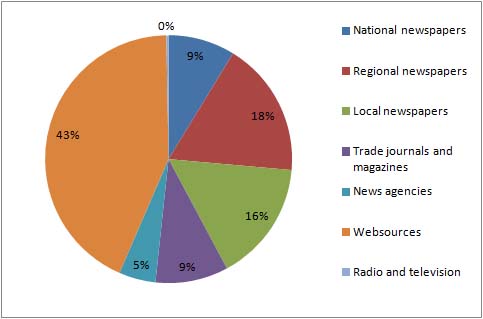
‘Design’ mentioned in the different media types in 2011

The 43% web content is to a large degree reviews of electronic products from large international cooperations or product reviews recycled in the online versions of various newspapers. This isn’t bad considered as raw media pressure of marketing campaigns, because it increases the chance that the individual consumer is reached, but it doesn’t really tell if there is an increased interest in design from the Danish press.

At the other end of the spectrum are news story summaries from the largest TV and radio stations with less than 1% (212). This is very bad from a branding perspective, because TV is very important for reaching and influencing a wide selection of the population. By comparison, ‘fashion’ is generally growing much faster, and was mentioned more than 24,000 times in TV and radio alone in 2011.

Total mentions of ‘design’ vs ‘fashion’ 2002-2012 (note that ‘design’ is very often mentioned in connection with product reviews and discussions of electronic products from large international cooperations).

‘Design’ broken down to source

Regional and local newspapers have taken a dramatic jump in the past years, which is probably due to two factors:

  1. The merging of provincial newspapers into larger media houses with smaller editorial staffs and reuse of articles across different newspapers.
  2. That lifestyle content is one of the easiest ways to fill pages, because journalists can more or less copy-paste the content from well written press releases supplied by design companies.

A quick read-through of the latest hundred articles for each media type revealed a noticeable work-partition:

  • The news bureaus and national newspapers have a strong international perspective on industrial competitiveness, international design news, events, and product reviews.
  • Regional newspapers are usually either writing about local design companies or new products.
  • Local newspapers focus on new products and local shops.
  • TV and radio is harder to pin down, because Infomedia only follows news programs (not lifestyle programs), which favours more spectacular content that can be presented as “fast news”. What exactly can make design sufficiently news-worthy is of course very interesting, so I’ll look more closely into this in later posts.

So ARE the media interested in design?
Definitely yes, because it help fill pages easily. But it is very problematic that design is mostly treated as either dry business news (company performance, international successes) or lifestyle content that is generally considered slightly corrupt compared to “real” journalism and unworthy for succesful journalists (in Denmark this kind of unfiltered product placement is unofficially called “luderjournalistik” – whore journalism. The equivalent word in English would probably be “churnalism“).

But how do you make good journalists consider design a serious journalistic subject? How can you make them move away from simple fact-reporting: how design “fix” problems and help sell stuff – to actually being interested in the (new) designers, their ideals and the aesthetic value of design to consumers and society?
Here it is probably necessary to switch from a marketing perspective to communication perspective; looking for the good opportunities for storytelling, branding and especially personal branding of the designers themselves.

Facts:

The figures and numbers used in this post comes from a small investigation I made via the Danish media intelligence company Infomedia.dk May 5th 2012, and the estimate for 2012 is roughly calculated as the activity of the first four months x 3.

Pictures from VISION SS13

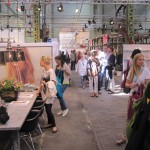
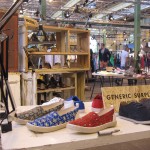
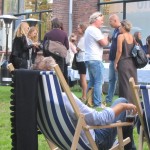
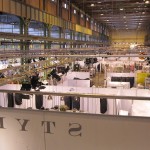
Some of the pictures I took during my work at VISION fashion fair SS13. See official pictures from the fair here.

Working at VISION fashion fair SS13

The summer 2013 I was hired by Exhibition Professionals to work with their new concept for a new furniture fair in Copenhagen, DNA. Instead I ended up spending a couple of exciting months working as marketing assistant at the company’s fashion fair (Cph) VISION SS13, when the launch of DNA was postponed for various reasons.

Working at Exhibition Professionals was a great experience in writing marketing material in English such as newsstories, press releases and various letters and invitations, as well as working with publishing systems such as Drupal, Meltwater, and Mailchimp.

But the best part was helping out and experiencing the turmoil actual fair: Preparing all the text for the fair app, helping out with practical stuff, photographing and finding newsstories for the webpage and social media, being sent back in a cab to print seating cards for the runway show (it’s really nice to know some advanced MS Office functions when things start being critical), participate in the flashy world of fashion, and meeting many nice people.

I’m happy to have contributed with several improvements to the communication, and had plenty more, but unfortunately the economic realities of short term projects in smaller companies, doesn’t always allow for a specialized communication employee.

You can check out examples of my work here.

Why this blog?

Primarily because I have a year off before I can start on my masters in Management of Creative Industries, and wish to spend the time familiarizing myself with the (Danish) design industry, develop my skills in writing about design, and of course have something to show off to potential employers.

To me, design and fashion are immensely interesting areas because of the complex interlpays of creativity, communication, branding, and hard business. But design is much more than that: it influences what it means to be human by changing human behavior: You may not be able to buy happiness, but I do believe that you can make the world a better place through design.

This blog is a journey of exploration. I hope you will find it inspiring, thought-provoking, and fun… and that you will share your thoughts in the comments (;