
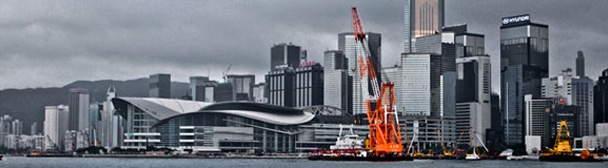
 The other day, I participated in a very interesting conference at Radisson BLU, Copenhagen arranged by Hong Kong Trade Development Council. It was a really nice way to get up to speed with current developments in Hong Kong and China. Here are some of the most interesting points.
The reason for the conference is the creation of a new commercial district in nearby Zhuhai on Mainland China (that will be connected to Hong Kong and Macau with a bridge in a couple of years) and that HKTDC is fishing for foreign investments and representation.
Hong Kong as Asian trendsetter:
Hong Kong is the regional design capital where rich Chinese go to shop. Several design and fashion weeks during the year. 44% of luxury products are Western brands. Free-trade agreement with China applies if a sufficiently large part of the product is created in Hong Kong.
IP protection (by Adrian Toutoungi, Partner, Eversheds LLP):
Hong Kong should be considered the gateway to China for a range of reasons:
- The legislative system is much more stable and familiar (tradition and language), because it’s based on British Common Law, but applies in Mainland China. In comparison, the Chinese system is very complicated and is regionally divided, which means that you may have to fight the same legal battles across different regions and levels with different results.
- The current five-year plan aims at establishing China as an innovation- and patent-based economy.
- The Chinese government has stepped up legislative efforts to protect IP property rights, but is still behind with enforcement.
- However, if you register your trademark (remember transliterations) with the customs authorities, they will actually take active steps to seize counterfeit products. Depending on your business strategy (brand-based, patent-based, short life cycles, etc.), it might be a good idea to register your trademark as soon as possible even though you are not actually planning on entering the Chinese market. The Danish fashion brand Hummel didn’t and ended up having their legitimate products seized as counterfeit once they started exporting to China, because a Chinese company had registrered their trademark!
- Pitfalls in the legislative process: If you hire a Chinese or Hong Kong firm to file for patents, they actually owns these unless specified in the contract. Improvements to original designs by local partners are owned by them. Be very aware where your IPs and trademarks are actually valid, for instance it turned out that Apple only had the rights to the name “iPad” in Taiwan not in Mainland China.
Opportunities for Danish design firms (Speaker: Nille Juhl-Sørensen CEO DDC):
- Hong Kong designers are just as good as Danish designers, but much faster (prototype development in weeks rather than months).
- We shouldn’t try to sell “Danish” design, but collaborative design, that suits their needs: Small living places calls for minimalism and multi-functionality, and considering a traditional Asian marketplace, the design should probably be loud and visible rather than quiet and discrete to fit the need to show off. Bonus opportunities are to sell the same products to India and other countries with similar luxury consumption patterns.
- Danish designers should focus on “social design”: Healthcare, social problems, basic needs in rural settings, cleantech. For instance: Why not increase the office temperature in air-conditioned buildings by a couple degrees to reduce cold-shock and energy consumption?
- Danish designers need to develop an “Asian mindset” but also act as outsiders being able to think out of the box.
A lot of other interesting remarks were made by other speakers from Hong Kong, Kontrapunkt and Danish Chamber of Commerce in South China. At the networking lunch afterwards I had a very nice long chat with Gitte Just CEO of Danish Design Association about Toronto and how to create much more media hype promoting Danish desingers and strengthen public awareness in both domestic and overseas markets.