What now?

I am not sure what I am going to use this page for, whether I will pick up blogging again or perhaps transition into YouTube videos like my girlfriend. But at the moment I am looking a bit into Android app-design, because I have an idea for a very useful app that could hold some potential, so I may write a bit about that.

I am currently looking for a project management position in a Danish design agency, you are more than welcome to spread the word:

Efter fire år i Design denmark udløber min kontrakt som projektleder 28. februar.
Jeg leder derfor efter en projektlederstilling i et mindre designbureau, der har brug for mine evner indenfor projektledelse, effektiv eksekvering, kundehåndtering, newbizz og morebizz. Det ville også være spændende, hvis stillingen giver mulighed for at arbejde med optimering af interne procedurer, kontrakter og juridisk sparring samt kommunikation/PR. Deltidsstillinger har også interesse.

Baggrund: Jeg har en bachelor i kommunikation og en kandidatgrad i Management of creative business processes fra CBS. Her har mit hovedfokus ligget på forretningsudvikling af designbureauer gennem forbedring af strategi, interne procedurer og tilføjelse af nødvendige medarbejderkompetencer. Derudover har jeg beskæftiget mig med neurocreativity, neurodesign, og relevant erhvervsjura, herunder beskyttelse af intellektuelle rettigheder, markedsføringsloven og persondataloven. Læs mere på LinkedIn.
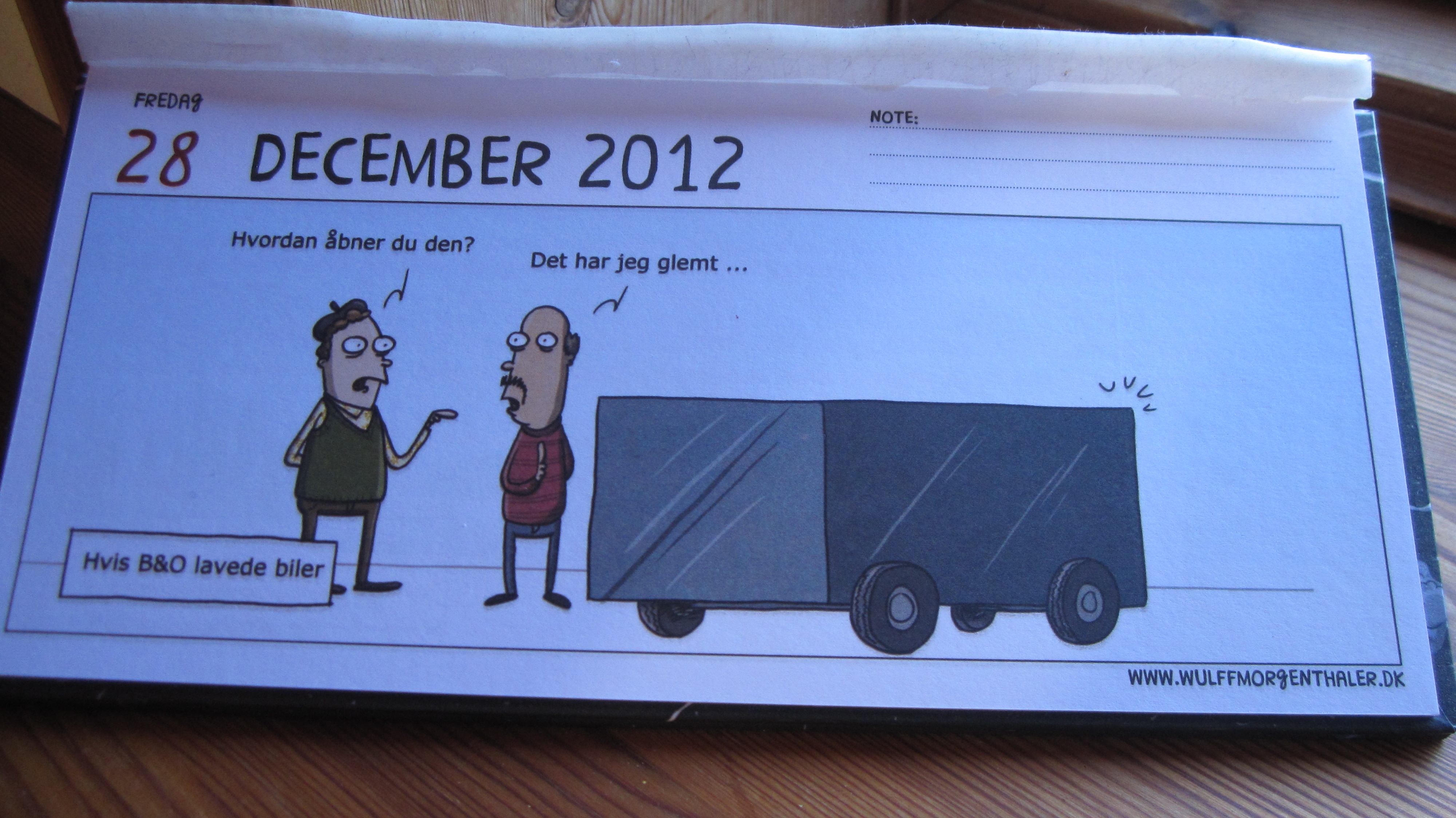


4 years at Design denmark and finished my masters degree

Time flies when you are having fun: Shortly after the last blogpost, I managed to get an internship at the Danish trade association for design companies, Danish Design Association. The internship turned into a student job when I started on my masters, and ended with a position as project manager.

My time at Danish Design Association (now Design denmark) has been very exciting: I have met and talked to numerous kind and inspiring people within the Danish design sector, arranged many small events and conferences, played a key role of keeping the organisation running through two CEO changes and one major merger with the competing organisation Danish Designers. Following the merger, I was responsible for finding, buying, designing and implementing the organisation’s new member-database, and subsequently extended the functionality of the member system to include more efficient handling of event-signup, online membership applications, relevant business statistics etc.

During my time at Design denmark, I finished my masters in Management of Creative Business Processes at Copenhagen Business School. With this master you can focus on helping conventional profit-oriented businesses become more creative, innovative and competitive, or managing creative companies, improving business models and profitability. Working at Design denmark gave me ample opportunity to encounter design service firms and get acquainted with the kind of challenges they typically face. Being highly interested in this kind of companies, I wrote most of my papers on these challenges, finishing off with a thesis interviewing CEOs of some of the most succesful design service firms in Denmark, and developing a model for how design service firms can professionalise marketing and sales effort, which non-designers are most relevant to hire, and how to use them most effectively.

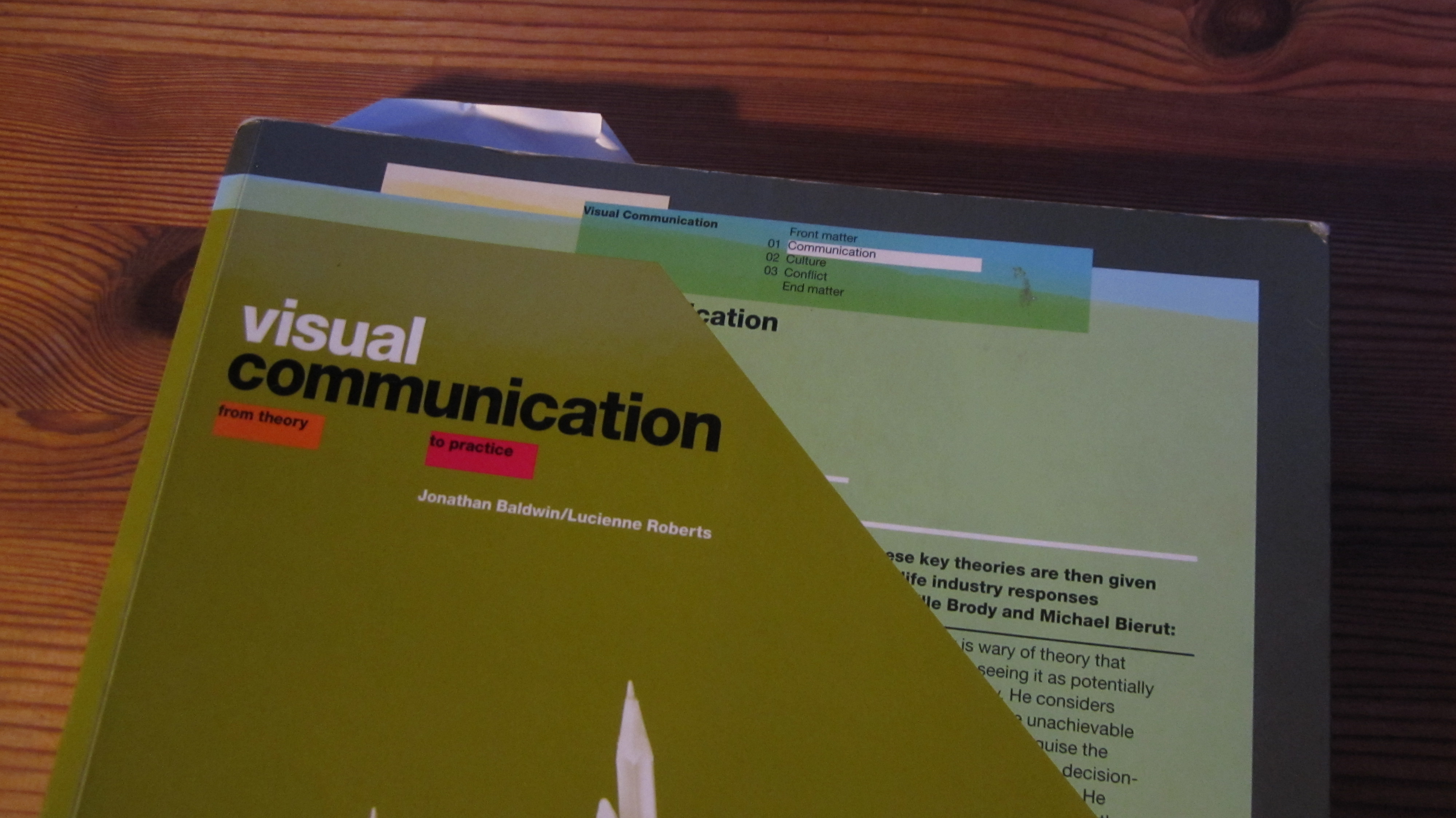
Review: Visual communication from theory to practice

At the moment I’m reading Visual Communication from theory to practice by Baldwin & Roberts. It’s a wonderful mix of communication theories, insightful comments from famous design practitioners, and illustrative examples of graphic design.

I’m seriously considering buying this book for my sofa-table, you should too.

The book is parted up in three sections, each combining a theoretical introduction with comments/application by practitioners, summary:

Design as communication

  • Introduction to Shannon & Weaver’s communication model (yes, very basic, but probably a good starting point for designers), plus semiotics and the construction of meaning (yay!).
  • Neville Brody criticizing the theories as constraining pseudo science and suggesting more personal guidance of students instead of teaching rules.
  • Michael Beirut agreeing that design is essentially communication but that the pseudo science in graphic design is caused by designers knowing too little of the theory and make something up as they go along to rationalize the solutions after the fact.

Design as culture and consumption

  • Segmentation, highbrow/lowbrow culture, popular culture and consumerism, identity creation, appropriation of counter cultures in the fashion cycle, etc.
  • Joan Farrer discussing the UK fashion industry, design process based on heavy market segmentation, economies of scale versus experimentation, and price versus ethics.
  • Shin Azumi & Tomoko Azumi: Democratization of good design via mass production, design process based on functionality and longevity, segmentation leads to mediocre design.

Design as conflict

  • All design is political, handling unethical design-work in a capitalist society, anti-brand movements, the threat from amateur designers, Bourdieu and the construction of the design field.
  • Erik Spiekermann discussing the relationship between designer and customer, public versus private customers, balancing ideals and earning money in a capitalist society,
  • Emmi Salonen wanting to help people through graphic design, criticizing the fight for designer stardom, realization that voluntary and public sectors are still markets, working for money while volunteering on the side as a solution.

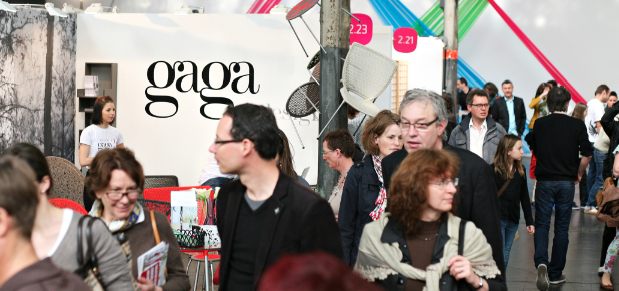
Event: Blickfang rethinking design fairs

A design fair where you can meet upcoming designers and buy the latest products directly seems like a very interesting attempt at covering the middle ground between professional trade fairs public outlets dumping last year’s products at discounted prices.

Since the conference center Bella Center discontinued its CODE design fair, Copenhagen has lacked an international design fair, and several actors are trying to fill the vacuum: I was originally hired by Exhibition Professionals to work with the DNA Nordic furniture and lighting fair. Unfortunately I only got to write the official press release postponing the fair to 2013, the same year Bella Center will be returning with its new DesignTrade Copenhagen and the biennale Danish Design Week.

Blickfang seem to try to edge in on the gap left by the big players, and with 5500 visitors they have promised to return.

The Blickfang fairs have existed in Germany, Austria and Switzerland for 15 years, combining furniture, home accessories, fashion, and jewellery. According to the international Blickfang webpage, the exhibitors seem to be mainly continental designers, while the Danish PR and marketing material indicate a strong Danish and Nordic presence.

Unfortunately I got sick and couldn’t participate. But from a consumer standpoint, I would really have liked to know the price level: Is this mostly aimed at the affluent and interior designers stocking up on fresh material, or are the prices appealing to a more diverse bargain hunter audience known from regular consumer fairs?

Another interesting question is why the designers decide to participate, and if they were satisfied with the results.

The marketing material promise a mixed audience of young fashion victims and wealthier design fans aged mid 20ties to early 60ties. This gives upcoming designers an opportunity to bypass retail and sell directly to trendsetting consumers, as well as strengthen the (brand) value: Adding the experience of treasure hunting for something unique, the glamour of meeting the actual designer, and knowledge of the thoughts and process behind.

Other benefits are the opportunity to network with other designers, producers, and journalists, as well as getting feedback and inspiration directly from the visitors

Blickfang has not achieved a lot of media attention yet, but was mentioned in Danish Design Association’s newsletter, fashionforum.dk, rumid.dk, eurowoman.dk, and in the home-section of financial newspaper Børsen. More thorough articles can be expected in media partner Eurowoman and RUM magazines.

Fair dates:

  • DesignTrade Copenhagen: August 28th-30th
  • DNA 2013: September 12-15th
  • Blickfang Copenhagen 2013: November 15th-19th

Shooting furniture designers

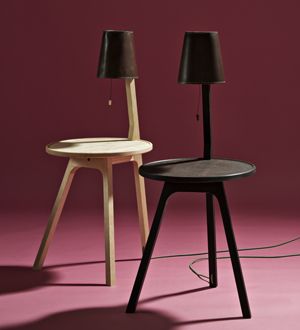
Fusion by Jonas Pedersen, ready for sale in 2013

Skud på stammen” (shoots on the tree trunk) is a Danish four week workshop each summer where designers and cabinetmaker apprentices create brand new furniture prototypes. The experience is obviously very enjoyable and worth-while for the participants, and often result in sellable products that can move the Danish furniture industry forward. But how can the communication and branding effort be taken to the next level?

Solid communication
The webpage and accompanying press release is solid communication, and the story was picked up by the Danish technical journal Ingeniøren. Strangely it wasn’t mentioned in neither Danish Design Centre or Danish Design Association’s newsletters.
The description of how the workshop was executed is rather limited, but this is probably a good idea to avoid competitors copying the concept.
Each participant has been asked 3-4 standard questions, which has resulted in some very good quotes from especially cabinmaker apprentices, while the designers are more brief.

Has the initial communication goals been reached?
Looking at the standard questions, the career counselling aspect is rather obvious: Designers are asked about their educational background (role model), while the apprentices are asked why they wish to become cabinet makers, and dreams for the future.

Both groups are asked why they decided to participate, which indicate that recruitment is (or has been), an important communicative goal. Judging by the replies from apprentices, most have heard about the workshop via word of mouth, and they are already sold to the idea. The designers seem more practical and less enthusiastic when replying to the questions.

So how could the designers be engaged more?
Since the workshop is hosted by Copenhagen Technical College for educational reasons, there is a limit to how many communication ressources can be spent on promoting the designers.
However, it ought to be possible to engage the designers more by making them talk more about themselves: How do you usually work with design (+ link to portfolio page)? How does this workshop influence the way you work as a designer?

Other initiatives could be

  • Extending the promotion by keeping the pages from previous years (it’s a big plus that books from previous years are available on the page, but since you can’t zoom in, it’s impossible to read the text on smaller screens).
  • Assemble design picture, designer and apprentice information in one convenient page, instead of spreading it over three different pages, where you often have to scroll down quite far, looking for a particular designer or apprentice.
  • Newspage spotlighting and following up on designs that have succesfully made it into production and links to external media coverage.
  • Live coverage of the workshop itself (pictures of the process, possibly on Facebook, blogs by designers or apprentices, or communication person walking around asking questions and finding the good stories).

Typefaces are also brands!

Ok, typefaces can help selling products, but they can also help build a suitable brand personality because people are feeling a lot about these little arbitrary symbol. But how much of this is actually build into the typeface and how much is just because the typeface has achieved a strong brand by itself?

IKEA’s “Verdanagate” crisis is a very interesting example: In 2009 IKEA changed the font on the IKEA Catalogue from Futura to Verdana which created an outrage in typography field. Surprisingly, several mainstream media such as Time Magazine, The Guardian, and New York Times actually picked up the story… ok, considering the fact that three IKEA Catalogues are printed for every Bible each year, perhaps we ought to consider how it influence design appreciation worldwide.

Despite the fact that a lot of attention was paid to the arguments and reactions of typofiles, the story wasn’t newsworthy because of the inherent qualities of Futura and Verdana, but because IKEA’s brand was under direct attack from respected opinion leaders:

  • Co-branding and ideological fit: Both Futura and IKEA design are based on modernist ideals, while Verdana is a typeface created for screen representation by Microsoft, associtating IKEA with the eternal bad guy in IT journalism.
  • Brand heritage: Futura is an old typeface from 1927 that IKEA had been using for 50 years, and even made a sligthly tweaked version (IKEA Sans). Changing the typeface could not only be seen as a betrayal of ideals, but also company traditions and culture. One of the most important aspects of branding from a consumer perspective is trust, because they know what to expect from the company, and because its trademark help them to easily choose products of the desired quality. Shaking up things create doubt and hesitation: if the company start cutting corners on small things like typeface design, what about the products?
  • Exclusivity: IKEA originally switched to Verdana because it’s websafe. Unfortunately, it is also one of the free fonts supplied with MS Word. You can’t diversify your products by using the same typeface as everybody else. The most important aspect of branding from the company’s perspective is the ability to demand a price premium for its products, and being associated with badly written birthday invitations and poorly chosen clip-art doesn’t make things easier.

The Verdanagate crisis shows that typefaces most definitely ought to be considered as separate brands that especially typofiles associate with certain qualities, heritage and feelings. However, the unusualness of the story also shows that typeface isn’t really a concern to the general public. So the heritage and feelings should probably be taken with a grain of salt when talking with the experts.

Half a year later, Futura was actually included among the websafe fonts, but IKEA kept Verdana, and the editing community of Wikipedia decided that the Verdanagate was too non-notable to merit a separate page and moved the content to the IKEA page.

Interesting links:

Plugin for checking typefaces on webpages: http://chengyinliu.com/whatfont.html

Why all the fuss about typefaces?

I recently started on “Just my type” by Simon Garfield. It is a very enoyable book about typefaces, and I’m planning to start on a small series of posts on the subject, because this particular part of the design world has been nagging me for a while: Why can people get so angry about Comic Sans, and why can’t you use the powdery frailness of Papyrus without being hit by the chilly winds of dissaproving silence?
First a little provocation:

Because I’m a social constructivist my first reaction is to whip out Bourdieu, arguing that it is completely arbitrary what is considered “good” typefaces and typography. It is just defined as good by people that have achieved a position within the pecking-order of this particular sub-field of design. A sub-field that isn’t fundamentally different from any other nerdy hobby with an established jargon, creative productivity, and an ongoing debate… Except that they have managed to convince the general public that typefaces and typography is somehow more important than other things like designing LEGO spaceships or cosplay costumes?
And one final provocation: Couldn’t we just use something like Helvetica for everything and be done with it?

Personally, I have a tendency to agree with Beatrice Wardes’ Cristal Goblet-argument, that printing should be invisible without disturbing the mental images created by the words of the text. Because my love of writing makes me focus on which emotion, mental images, and insights the words create – instead of how the letters happen to look on the page.
However, typefaces can add something extra to a text, and if you want to sell stuff, everything from content to appearance counts.

This makes typefaces obviously important from an economic standpoint. We live in an industrialized society with participation of labour, where the continuous battle for attention and desire means that everything is being more thoroughly designed from the product itself to visual identity and training of sales personnel.  It’s natural that type designers and graphical designers get their share of this development, and well known companies can often get a surprising amount of media coverage by making slight changes in their visual identity or logo, while a few companies like IKEA has even attracted a lot of critisism by simply changing their standard typeface.

So from a tactical perspective, playing the typeface-game is not only necessary to keep up with competitors, but can also occasionally create attention and brand visbility.
But typefaces is also a lot about feelings, and feelings are very important for developing an attractive brand personality, more on this topic next time!

Danish Design Award 2012

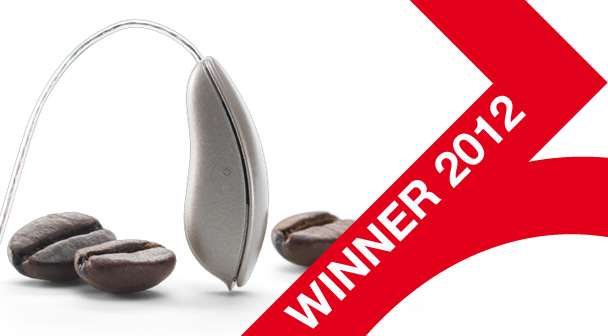
Oticon Intiga, winner of both Danish Design Award Industrial Design B2C and -People’s Choice

The annual Danish Design Award yesterday introduced two new excellent initiatives: People’s Choice Award and a Talent Award for promising design students. But could the award presentation be turned into a red carpet style media event?

Designers are notoriously bad at getting out there and promote themselves as media personalities, and will generally prefer being picked by a respected curator rather than promoting themselves. The new Talent Award could be a great way to increase media awareness among design students, and give the selected few a starting push toward building their personal brand. That is, if they’re willing to start cooperating with the media.

The People’s Choice Award is another great way to increase awareness of the importance of design and the design industry. The concept is well known from many other types of contests that try to involve the audience more than being mere spectators to the judgement of experts. But success obviously relies on whether anybody is actually voting or paying attention to the results. And that takes media coverage.

Media coverage

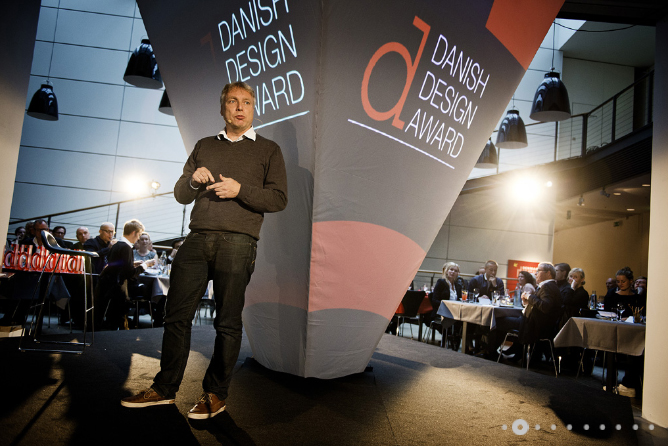
Minister of Culture Uffe Elbæk spreading glamour at the award presentation

In line with the little investigation I made of ‘design’ on Infomedia a few posts back, most mainstream newspapers seem to have dutifully reported the results of the design awards (industry news). Judging by the pictures, however, the award presentation seemed like a relatively small and private event in the café at Danish Design Centre, and the journalists may not have done much more than rework the story from available press releases.

Judging by an article in the Danish national newspaper Politiken, the shutting down of commercial activities and focus on core business at DDC may have a lot to do with a substantial loss of government funding and a less than sympathetic stakeholder satisfaction analysis.

This makes it doubtful that DDC will be able to lure in the press with a big red carpet style award show in the foreseeable future. But something needs to be done because without genuine press interest, the two other components: designer branding and public participation simply doesn’t work.