Shooting furniture designers

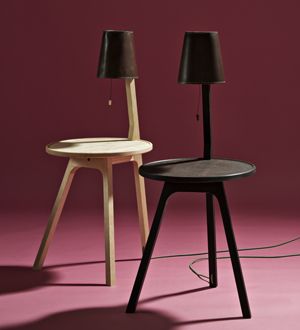
Fusion by Jonas Pedersen, ready for sale in 2013

Skud på stammen” (shoots on the tree trunk) is a Danish four week workshop each summer where designers and cabinetmaker apprentices create brand new furniture prototypes. The experience is obviously very enjoyable and worth-while for the participants, and often result in sellable products that can move the Danish furniture industry forward. But how can the communication and branding effort be taken to the next level?

Solid communication
The webpage and accompanying press release is solid communication, and the story was picked up by the Danish technical journal Ingeniøren. Strangely it wasn’t mentioned in neither Danish Design Centre or Danish Design Association’s newsletters.
The description of how the workshop was executed is rather limited, but this is probably a good idea to avoid competitors copying the concept.
Each participant has been asked 3-4 standard questions, which has resulted in some very good quotes from especially cabinmaker apprentices, while the designers are more brief.

Has the initial communication goals been reached?
Looking at the standard questions, the career counselling aspect is rather obvious: Designers are asked about their educational background (role model), while the apprentices are asked why they wish to become cabinet makers, and dreams for the future.

Both groups are asked why they decided to participate, which indicate that recruitment is (or has been), an important communicative goal. Judging by the replies from apprentices, most have heard about the workshop via word of mouth, and they are already sold to the idea. The designers seem more practical and less enthusiastic when replying to the questions.

So how could the designers be engaged more?
Since the workshop is hosted by Copenhagen Technical College for educational reasons, there is a limit to how many communication ressources can be spent on promoting the designers.
However, it ought to be possible to engage the designers more by making them talk more about themselves: How do you usually work with design (+ link to portfolio page)? How does this workshop influence the way you work as a designer?

Other initiatives could be

  • Extending the promotion by keeping the pages from previous years (it’s a big plus that books from previous years are available on the page, but since you can’t zoom in, it’s impossible to read the text on smaller screens).
  • Assemble design picture, designer and apprentice information in one convenient page, instead of spreading it over three different pages, where you often have to scroll down quite far, looking for a particular designer or apprentice.
  • Newspage spotlighting and following up on designs that have succesfully made it into production and links to external media coverage.
  • Live coverage of the workshop itself (pictures of the process, possibly on Facebook, blogs by designers or apprentices, or communication person walking around asking questions and finding the good stories).
Danish Design Award 2012

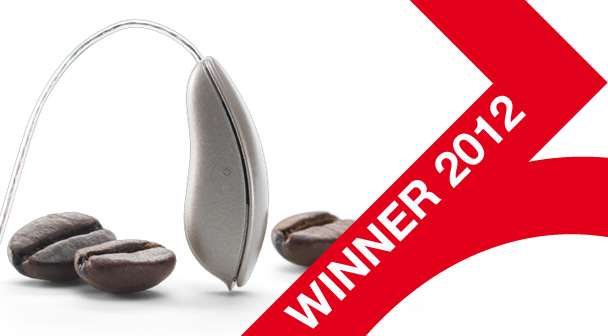
Oticon Intiga, winner of both Danish Design Award Industrial Design B2C and -People’s Choice

The annual Danish Design Award yesterday introduced two new excellent initiatives: People’s Choice Award and a Talent Award for promising design students. But could the award presentation be turned into a red carpet style media event?

Designers are notoriously bad at getting out there and promote themselves as media personalities, and will generally prefer being picked by a respected curator rather than promoting themselves. The new Talent Award could be a great way to increase media awareness among design students, and give the selected few a starting push toward building their personal brand. That is, if they’re willing to start cooperating with the media.

The People’s Choice Award is another great way to increase awareness of the importance of design and the design industry. The concept is well known from many other types of contests that try to involve the audience more than being mere spectators to the judgement of experts. But success obviously relies on whether anybody is actually voting or paying attention to the results. And that takes media coverage.

Media coverage

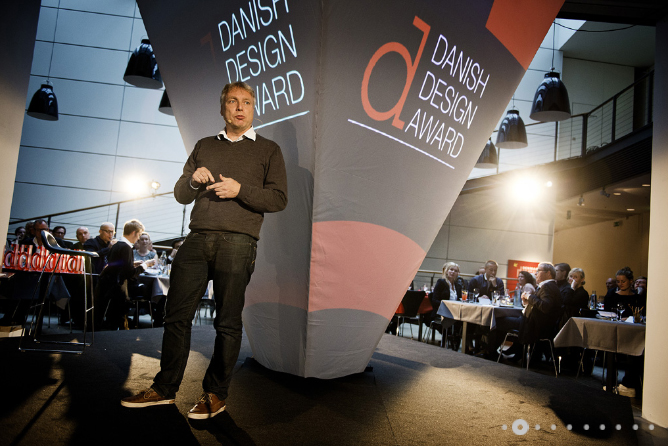
Minister of Culture Uffe Elbæk spreading glamour at the award presentation

In line with the little investigation I made of ‘design’ on Infomedia a few posts back, most mainstream newspapers seem to have dutifully reported the results of the design awards (industry news). Judging by the pictures, however, the award presentation seemed like a relatively small and private event in the café at Danish Design Centre, and the journalists may not have done much more than rework the story from available press releases.

Judging by an article in the Danish national newspaper Politiken, the shutting down of commercial activities and focus on core business at DDC may have a lot to do with a substantial loss of government funding and a less than sympathetic stakeholder satisfaction analysis.

This makes it doubtful that DDC will be able to lure in the press with a big red carpet style award show in the foreseeable future. But something needs to be done because without genuine press interest, the two other components: designer branding and public participation simply doesn’t work.

Research: Is the Danish media even interested in design?

Media attention is crucial for attracting the necessary talent, establishing new designers, and creating a strong home-market that can be used as spring-board for international expansion. Back in May, I made a little investigation of how much and where ‘design’ was mentioned in Danish media. This gave some really interesting insights into design journalism.

Coming from an education in communication, marketing and branding, with special focus on design and fashion, I was obviously interested in knowing where the challenges are for the Danish design field, and where I can help make a difference. Here are some of the most interesting results:

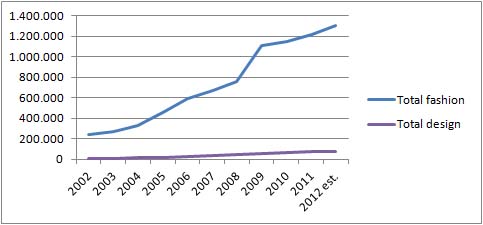
The good news is that there seem to be a dramatic increase in the use of the word ‘design’ from roughly 8500 to 72000 articles over the past ten years. Unfortunately these figures are heavily inflated by large media houses duplicating their content on the web and influenced by structural changes of regional and local press.

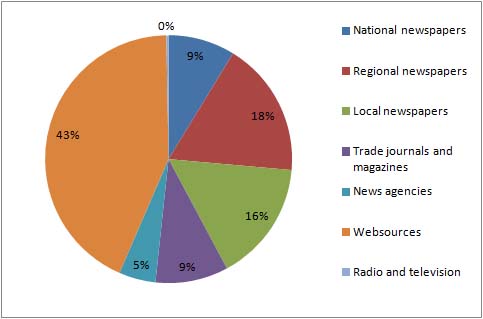
‘Design’ mentioned in the different media types in 2011

The 43% web content is to a large degree reviews of electronic products from large international cooperations or product reviews recycled in the online versions of various newspapers. This isn’t bad considered as raw media pressure of marketing campaigns, because it increases the chance that the individual consumer is reached, but it doesn’t really tell if there is an increased interest in design from the Danish press.

At the other end of the spectrum are news story summaries from the largest TV and radio stations with less than 1% (212). This is very bad from a branding perspective, because TV is very important for reaching and influencing a wide selection of the population. By comparison, ‘fashion’ is generally growing much faster, and was mentioned more than 24,000 times in TV and radio alone in 2011.

Total mentions of ‘design’ vs ‘fashion’ 2002-2012 (note that ‘design’ is very often mentioned in connection with product reviews and discussions of electronic products from large international cooperations).

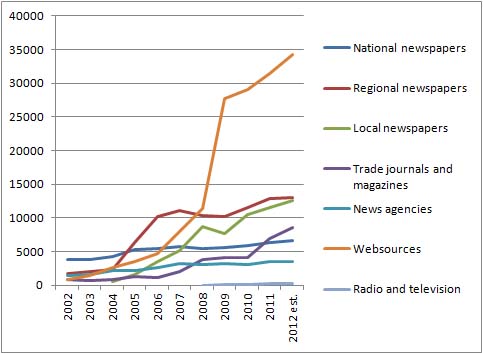
‘Design’ broken down to source

Regional and local newspapers have taken a dramatic jump in the past years, which is probably due to two factors:

  1. The merging of provincial newspapers into larger media houses with smaller editorial staffs and reuse of articles across different newspapers.
  2. That lifestyle content is one of the easiest ways to fill pages, because journalists can more or less copy-paste the content from well written press releases supplied by design companies.

A quick read-through of the latest hundred articles for each media type revealed a noticeable work-partition:

  • The news bureaus and national newspapers have a strong international perspective on industrial competitiveness, international design news, events, and product reviews.
  • Regional newspapers are usually either writing about local design companies or new products.
  • Local newspapers focus on new products and local shops.
  • TV and radio is harder to pin down, because Infomedia only follows news programs (not lifestyle programs), which favours more spectacular content that can be presented as “fast news”. What exactly can make design sufficiently news-worthy is of course very interesting, so I’ll look more closely into this in later posts.

So ARE the media interested in design?
Definitely yes, because it help fill pages easily. But it is very problematic that design is mostly treated as either dry business news (company performance, international successes) or lifestyle content that is generally considered slightly corrupt compared to “real” journalism and unworthy for succesful journalists (in Denmark this kind of unfiltered product placement is unofficially called “luderjournalistik” – whore journalism. The equivalent word in English would probably be “churnalism“).

But how do you make good journalists consider design a serious journalistic subject? How can you make them move away from simple fact-reporting: how design “fix” problems and help sell stuff – to actually being interested in the (new) designers, their ideals and the aesthetic value of design to consumers and society?
Here it is probably necessary to switch from a marketing perspective to communication perspective; looking for the good opportunities for storytelling, branding and especially personal branding of the designers themselves.

Facts:

The figures and numbers used in this post comes from a small investigation I made via the Danish media intelligence company Infomedia.dk May 5th 2012, and the estimate for 2012 is roughly calculated as the activity of the first four months x 3.

Working at VISION fashion fair SS13

The summer 2013 I was hired by Exhibition Professionals to work with their new concept for a new furniture fair in Copenhagen, DNA. Instead I ended up spending a couple of exciting months working as marketing assistant at the company’s fashion fair (Cph) VISION SS13, when the launch of DNA was postponed for various reasons.

Working at Exhibition Professionals was a great experience in writing marketing material in English such as newsstories, press releases and various letters and invitations, as well as working with publishing systems such as Drupal, Meltwater, and Mailchimp.

But the best part was helping out and experiencing the turmoil actual fair: Preparing all the text for the fair app, helping out with practical stuff, photographing and finding newsstories for the webpage and social media, being sent back in a cab to print seating cards for the runway show (it’s really nice to know some advanced MS Office functions when things start being critical), participate in the flashy world of fashion, and meeting many nice people.

I’m happy to have contributed with several improvements to the communication, and had plenty more, but unfortunately the economic realities of short term projects in smaller companies, doesn’t always allow for a specialized communication employee.

You can check out examples of my work here.