
Shooting furniture designers

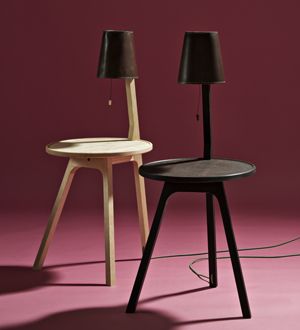
Fusion by Jonas Pedersen, ready for sale in 2013

Skud på stammen” (shoots on the tree trunk) is a Danish four week workshop each summer where designers and cabinetmaker apprentices create brand new furniture prototypes. The experience is obviously very enjoyable and worth-while for the participants, and often result in sellable products that can move the Danish furniture industry forward. But how can the communication and branding effort be taken to the next level?

Solid communication
The webpage and accompanying press release is solid communication, and the story was picked up by the Danish technical journal Ingeniøren. Strangely it wasn’t mentioned in neither Danish Design Centre or Danish Design Association’s newsletters.
The description of how the workshop was executed is rather limited, but this is probably a good idea to avoid competitors copying the concept.
Each participant has been asked 3-4 standard questions, which has resulted in some very good quotes from especially cabinmaker apprentices, while the designers are more brief.

Has the initial communication goals been reached?
Looking at the standard questions, the career counselling aspect is rather obvious: Designers are asked about their educational background (role model), while the apprentices are asked why they wish to become cabinet makers, and dreams for the future.

Both groups are asked why they decided to participate, which indicate that recruitment is (or has been), an important communicative goal. Judging by the replies from apprentices, most have heard about the workshop via word of mouth, and they are already sold to the idea. The designers seem more practical and less enthusiastic when replying to the questions.

So how could the designers be engaged more?
Since the workshop is hosted by Copenhagen Technical College for educational reasons, there is a limit to how many communication ressources can be spent on promoting the designers.
However, it ought to be possible to engage the designers more by making them talk more about themselves: How do you usually work with design (+ link to portfolio page)? How does this workshop influence the way you work as a designer?

Other initiatives could be

  • Extending the promotion by keeping the pages from previous years (it’s a big plus that books from previous years are available on the page, but since you can’t zoom in, it’s impossible to read the text on smaller screens).
  • Assemble design picture, designer and apprentice information in one convenient page, instead of spreading it over three different pages, where you often have to scroll down quite far, looking for a particular designer or apprentice.
  • Newspage spotlighting and following up on designs that have succesfully made it into production and links to external media coverage.
  • Live coverage of the workshop itself (pictures of the process, possibly on Facebook, blogs by designers or apprentices, or communication person walking around asking questions and finding the good stories).

Danish Design Award 2012

Oticon Intiga, winner of both Danish Design Award Industrial Design B2C and -People’s Choice

The annual Danish Design Award yesterday introduced two new excellent initiatives: People’s Choice Award and a Talent Award for promising design students. But could the award presentation be turned into a red carpet style media event?

Designers are notoriously bad at getting out there and promote themselves as media personalities, and will generally prefer being picked by a respected curator rather than promoting themselves. The new Talent Award could be a great way to increase media awareness among design students, and give the selected few a starting push toward building their personal brand. That is, if they’re willing to start cooperating with the media.

The People’s Choice Award is another great way to increase awareness of the importance of design and the design industry. The concept is well known from many other types of contests that try to involve the audience more than being mere spectators to the judgement of experts. But success obviously relies on whether anybody is actually voting or paying attention to the results. And that takes media coverage.

Media coverage

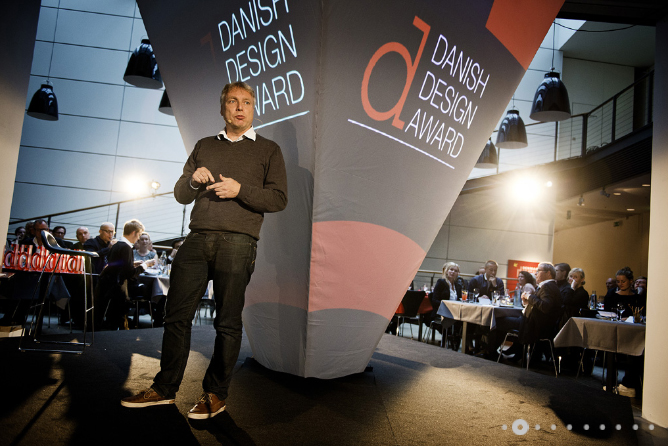
Minister of Culture Uffe Elbæk spreading glamour at the award presentation

In line with the little investigation I made of ‘design’ on Infomedia a few posts back, most mainstream newspapers seem to have dutifully reported the results of the design awards (industry news). Judging by the pictures, however, the award presentation seemed like a relatively small and private event in the café at Danish Design Centre, and the journalists may not have done much more than rework the story from available press releases.

Judging by an article in the Danish national newspaper Politiken, the shutting down of commercial activities and focus on core business at DDC may have a lot to do with a substantial loss of government funding and a less than sympathetic stakeholder satisfaction analysis.

This makes it doubtful that DDC will be able to lure in the press with a big red carpet style award show in the foreseeable future. But something needs to be done because without genuine press interest, the two other components: designer branding and public participation simply doesn’t work.

Event: Trendspotting in Hong Kong

The other day, I participated in a very interesting conference at Radisson BLU, Copenhagen arranged by Hong Kong Trade Development Council. It was a really nice way to get up to speed with current developments in Hong Kong and China. Here are some of the most interesting points.

The reason for the conference is the creation of a new commercial district in nearby Zhuhai on Mainland China (that will be connected to Hong Kong and Macau with a bridge in a couple of years) and that HKTDC is fishing for foreign investments and representation.

Hong Kong as Asian trendsetter:

Hong Kong is the regional design capital where rich Chinese go to shop. Several design and fashion weeks during the year. 44% of luxury products are Western brands. Free-trade agreement with China applies if a sufficiently large part of the product is created in Hong Kong.

IP protection (by Adrian Toutoungi, Partner, Eversheds LLP):

Hong Kong should be considered the gateway to China for a range of reasons:

  • The legislative system is much more stable and familiar (tradition and language), because it’s based on British Common Law, but applies in Mainland China. In comparison, the Chinese system is very complicated and is regionally divided, which means that you may have to fight the same legal battles across different regions and levels with different results.
  • The current five-year plan aims at establishing China as an innovation- and patent-based economy.
  • The Chinese government has stepped up legislative efforts to protect IP property rights, but is still behind with enforcement.
  • However, if you register your trademark (remember transliterations) with the customs authorities, they will actually take active steps to seize counterfeit products. Depending on your business strategy (brand-based, patent-based, short life cycles, etc.), it might be a good idea to register your trademark as soon as possible even though you are not actually planning on entering the Chinese market. The Danish fashion brand Hummel didn’t and ended up having their legitimate products seized as counterfeit once they started exporting to China, because a Chinese company had registrered their trademark!
  • Pitfalls in the legislative process: If you hire a Chinese or Hong Kong firm to file for patents, they actually owns these unless specified in the contract. Improvements to original designs by local partners are owned by them. Be very aware where your IPs and trademarks are actually valid, for instance it turned out that Apple only had the rights to the name “iPad” in Taiwan not in Mainland China.

Opportunities for Danish design firms (Speaker: Nille Juhl-Sørensen CEO DDC):

  • Hong Kong designers are just as good as Danish designers, but much faster (prototype development in weeks rather than months).
  • We shouldn’t try to sell “Danish” design, but collaborative design, that suits their needs: Small living places calls for minimalism and multi-functionality, and considering a traditional Asian marketplace, the design should probably be loud and visible rather than quiet and discrete to fit the need to show off. Bonus opportunities are to sell the same products to India and other countries with similar luxury consumption patterns.
  • Danish designers should focus on “social design”: Healthcare, social problems, basic needs in rural settings, cleantech. For instance: Why not increase the office temperature in air-conditioned buildings by a couple degrees to reduce cold-shock and energy consumption?
  • Danish designers need to develop an “Asian mindset” but also act as outsiders being able to think out of the box.

A lot of other interesting remarks were made by other speakers from Hong Kong, Kontrapunkt and Danish Chamber of Commerce in South China. At the networking lunch afterwards I had a very nice long chat with Gitte Just CEO of Danish Design Association about Toronto and how to create much more media hype promoting Danish desingers and strengthen public awareness in both domestic and overseas markets.