Event: Blickfang rethinking design fairs

A design fair where you can meet upcoming designers and buy the latest products directly seems like a very interesting attempt at covering the middle ground between professional trade fairs public outlets dumping last year’s products at discounted prices.

Since the conference center Bella Center discontinued its CODE design fair, Copenhagen has lacked an international design fair, and several actors are trying to fill the vacuum: I was originally hired by Exhibition Professionals to work with the DNA Nordic furniture and lighting fair. Unfortunately I only got to write the official press release postponing the fair to 2013, the same year Bella Center will be returning with its new DesignTrade Copenhagen and the biennale Danish Design Week.

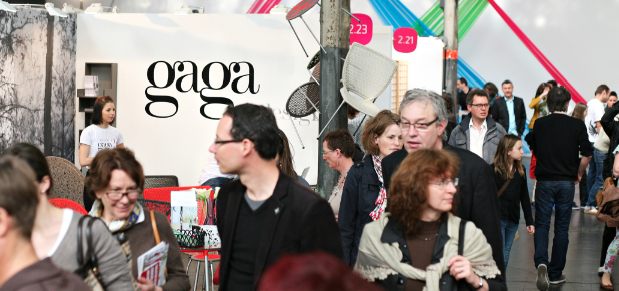
Blickfang seem to try to edge in on the gap left by the big players, and with 5500 visitors they have promised to return.

The Blickfang fairs have existed in Germany, Austria and Switzerland for 15 years, combining furniture, home accessories, fashion, and jewellery. According to the international Blickfang webpage, the exhibitors seem to be mainly continental designers, while the Danish PR and marketing material indicate a strong Danish and Nordic presence.

Unfortunately I got sick and couldn’t participate. But from a consumer standpoint, I would really have liked to know the price level: Is this mostly aimed at the affluent and interior designers stocking up on fresh material, or are the prices appealing to a more diverse bargain hunter audience known from regular consumer fairs?

Another interesting question is why the designers decide to participate, and if they were satisfied with the results.

The marketing material promise a mixed audience of young fashion victims and wealthier design fans aged mid 20ties to early 60ties. This gives upcoming designers an opportunity to bypass retail and sell directly to trendsetting consumers, as well as strengthen the (brand) value: Adding the experience of treasure hunting for something unique, the glamour of meeting the actual designer, and knowledge of the thoughts and process behind.

Other benefits are the opportunity to network with other designers, producers, and journalists, as well as getting feedback and inspiration directly from the visitors

Blickfang has not achieved a lot of media attention yet, but was mentioned in Danish Design Association’s newsletter, fashionforum.dk, rumid.dk, eurowoman.dk, and in the home-section of financial newspaper Børsen. More thorough articles can be expected in media partner Eurowoman and RUM magazines.

Fair dates:

  • DesignTrade Copenhagen: August 28th-30th
  • DNA 2013: September 12-15th
  • Blickfang Copenhagen 2013: November 15th-19th
Shooting furniture designers

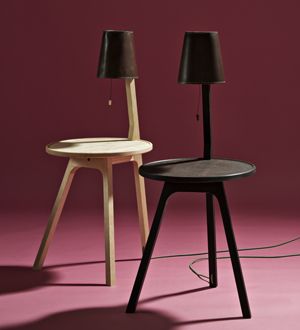
Fusion by Jonas Pedersen, ready for sale in 2013

Skud på stammen” (shoots on the tree trunk) is a Danish four week workshop each summer where designers and cabinetmaker apprentices create brand new furniture prototypes. The experience is obviously very enjoyable and worth-while for the participants, and often result in sellable products that can move the Danish furniture industry forward. But how can the communication and branding effort be taken to the next level?

Solid communication
The webpage and accompanying press release is solid communication, and the story was picked up by the Danish technical journal Ingeniøren. Strangely it wasn’t mentioned in neither Danish Design Centre or Danish Design Association’s newsletters.
The description of how the workshop was executed is rather limited, but this is probably a good idea to avoid competitors copying the concept.
Each participant has been asked 3-4 standard questions, which has resulted in some very good quotes from especially cabinmaker apprentices, while the designers are more brief.

Has the initial communication goals been reached?
Looking at the standard questions, the career counselling aspect is rather obvious: Designers are asked about their educational background (role model), while the apprentices are asked why they wish to become cabinet makers, and dreams for the future.

Both groups are asked why they decided to participate, which indicate that recruitment is (or has been), an important communicative goal. Judging by the replies from apprentices, most have heard about the workshop via word of mouth, and they are already sold to the idea. The designers seem more practical and less enthusiastic when replying to the questions.

So how could the designers be engaged more?
Since the workshop is hosted by Copenhagen Technical College for educational reasons, there is a limit to how many communication ressources can be spent on promoting the designers.
However, it ought to be possible to engage the designers more by making them talk more about themselves: How do you usually work with design (+ link to portfolio page)? How does this workshop influence the way you work as a designer?

Other initiatives could be

  • Extending the promotion by keeping the pages from previous years (it’s a big plus that books from previous years are available on the page, but since you can’t zoom in, it’s impossible to read the text on smaller screens).
  • Assemble design picture, designer and apprentice information in one convenient page, instead of spreading it over three different pages, where you often have to scroll down quite far, looking for a particular designer or apprentice.
  • Newspage spotlighting and following up on designs that have succesfully made it into production and links to external media coverage.
  • Live coverage of the workshop itself (pictures of the process, possibly on Facebook, blogs by designers or apprentices, or communication person walking around asking questions and finding the good stories).