Establishing and retaining your status as a designer requires solid personal branding. You would expect that most design companies would have a very well designed webpage. Surprisingly often, this is not the case, probably due to a combination of designer culture and lack of communication expertise.
I followed a course in Visual Identity in the autumn of 2011. In my exam project, I moved beyond merely evaluating the visual elements of a selected company’s visual identity, and made a comparative analysis of 39 companies tagged with industrial design in the Danish Design Centre’s database.
First impressions matter:
User experience tests consistently show that web users on average spend 27 seconds on the main page of a website, and that they will simply move on to another website, unless the page achieve four important goals: Tell people what site they have arrived on, what the company can do for them, something about the company, and how to easily move on to the most relevant sections.
Messages have to be ultra lean, only ten to twenty words, because the visitors are spending most of the time figuring out where to go next, rather than reading word for word. Most people won’t scroll (77%) and if they ever come back, they will spend even less time reading your main page.
Pictures: what are they showing?
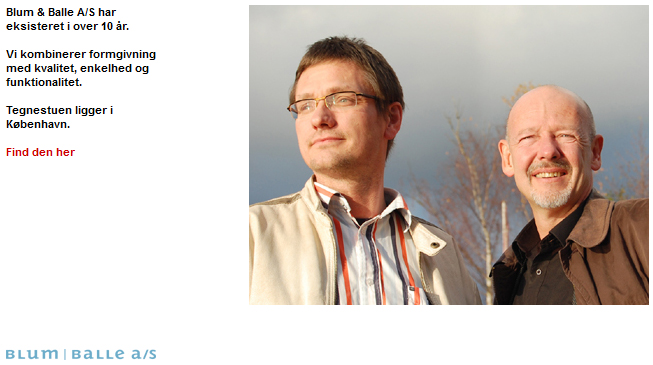
Trustworthy partners at blum-balle.dk
The webpages are very varied, but most of them have a logo, navigation menu, and pictures of designs. Very few had pictures of the designers themselves, which is a bit surprising since the product on offer for an interested production company is actually the designer herself, and her ability to participate in future development projects.
Choosing pictures for the main page is obviously tricky: Design pictures were usually either displayed as minimalistic (one or few pictures), complex (many pictures), hybrid (slideshow), or neutral (no pictures). Each of these options comes with certain risks: selecting one wrong picture, showing too many and too small pictures, a slideshow that changes too fast or too slow, and a page that is just end up boring.
Text: who are they talking to?
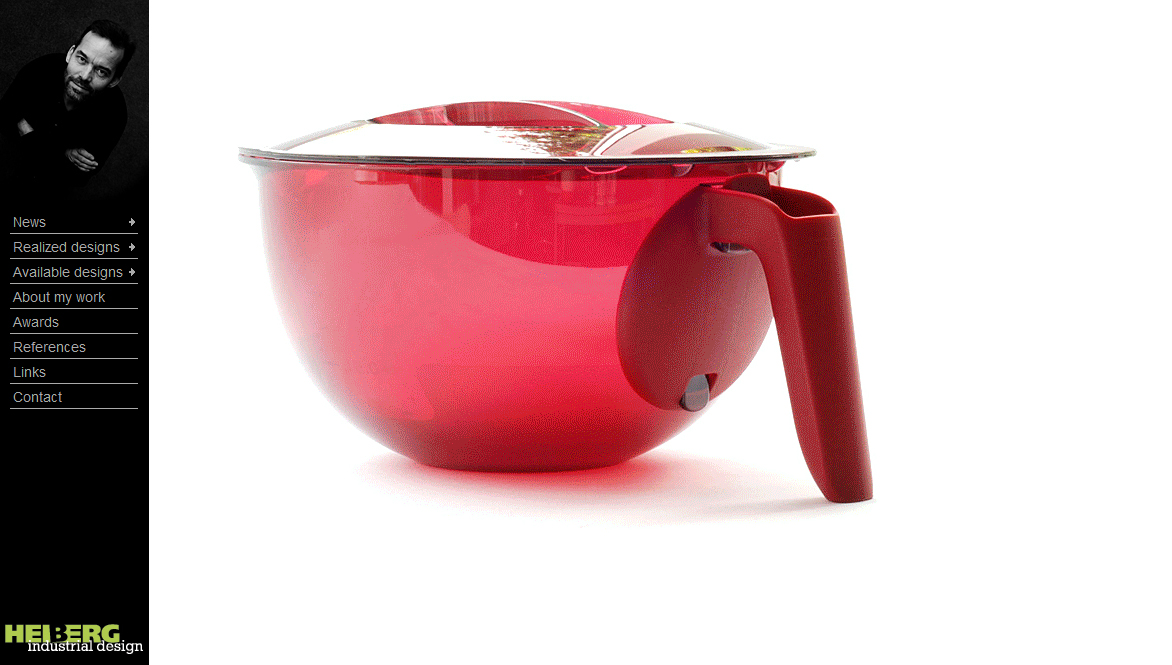
Striking, artsy, and beautiful… but how many has actually been sold? heiberg-id.com
According to Guy Julier, most designers have a secret desire to create “art” and achieve recognition from their peers , by having their design selected for exhibitions, winning design awards, and ultimately having somebody else praise the aesthetic value in books about the history of design. And a fear of being accused of “selling out” by their colleagues if they’re too good at fulfilling their customers need for utility, added value and commercial potential.**
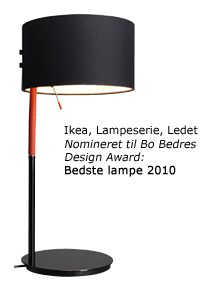
If IKEA is a customer, these designers can sell! halskovdalsgaard.dk
Only a third of the pages had text describing their unique selling proposition: company profile, design philosophy, design examples, or case descriptions. The choice obviously depends on whether they wish to differentiate themselves from competitors based on working method or earlier successes (often backed up with design awards).
However, almost none described why the consumers would benefit from increasing the design content of the products or the commercial performance of earlier designs, which is of obvious importance to interested production companies.
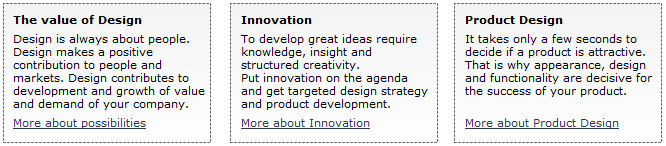
Refreshingly rational arguments from onoe-design.dk
How do you make a good design portfolio webpage?
Designers have different profiles in terms of specialization, experience, level of success, etc. but a few general recommendations can be made:
- Promote yourself as a designer and attractive partner in development projects.
- Show the performance of earlier designs in terms of economic and communicative performance of products (e.g. number of products sold, how much free media attention has the design attracted, etc.).
- Remember that you are not writing to impress your colleague designers. You are writing to businessmen that consider your design as a potential investment of money and your most important priority is to convince them that this investment will pay off.
- If in doubt, hire a graphics designer and/or communication expert rather than make a webpage that looks unprofessional
Great examples:
- Focus on the designer as attractive partner: blum-balle.dk
- Focus on commercialized products and media attention: halskovdalsgaard.dk
- Focus on rational arguments and economic potential: onoe-design.dk/
* Nielsen, J & Loranger, H 2006: Prioritizing web usability, chapter 2
** Julier, G. 2000: The culture of design